Skip to header Skip to main navigation Skip to main content Skip to footer
Home
Butte Montana
The Richest Hill on Earth

Main navigation

  • Home
  • Articles
  • Business Directory
  • Dining
  • History
  • Lodging
  • Outdoors
  • Shopping
  • Things to Do
  • Weather
  • Webcams

Articles

Sixteen Trains a Day: Butte's Depots, Streetcars, and the Road to Rocker
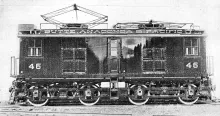
Butte, Anaconda and Pacific Railway electric locomotive built by General Electric, photographed in December 1914

Did you know that in 1916, sixteen passenger trains a day stopped at one Butte depot? The Northern Pacific and Union Pacific station at 800 East Front Street was the busiest and longest-operated passenger depot in the city. Before there was a grand station, there was a modest wooden one. The Union Pacific, the first railroad to reach Montana, established a terminal a mile south of Uptown in 1881. When the Northern Pacific reached Butte in 1890, it shared that wooden depot, and as Butte grew into a metropolis, local businessmen lobbied for a grand union station.
  • Read more about Sixteen Trains a Day: Butte's Depots, Streetcars, and the Road to Rocker

The Neighborhoods the Pit Ate: Meaderville, McQueen, and East Butte

The Berkeley Pit in Butte, Montana, the open-pit mine that swallowed the neighborhoods of Meaderville, McQueen, and East Butte.

Did you know that some of Butte's most beloved neighborhoods no longer exist at all, not even as ground you can stand on? On the east side of the Richest Hill, whole communities grew up in the shadow of the headframes, close enough for miners to walk to work with lunch buckets in hand. Italians settled in Meaderville, Eastern Europeans in the McQueen Addition, and Irish families in Dublin Gulch, and each neighborhood kept its own language, church, social clubs, and food.

  • Read more about The Neighborhoods the Pit Ate: Meaderville, McQueen, and East Butte

From Allihies to Centerville: The Beara Miners Who Made Butte Irish

Residential homes on a street in Centerville, Butte, Montana, with a mine headframe visible in the distance

Did you know that one Butte neighborhood was settled, in large part, by copper miners from a single peninsula in Ireland? Centerville, climbing the hill above Uptown Butte, had the highest Irish concentration in Silver Bow County, and the majority of its Irish families came from the Beara Peninsula in County Cork. Many had worked the copper mines at Allihies, and when those mines failed, a chain of migration carried them across the Atlantic to another copper hill.

  • Read more about From Allihies to Centerville: The Beara Miners Who Made Butte Irish

Box 72 and the Thirteen: Butte's Fallen Firefighters of 1895

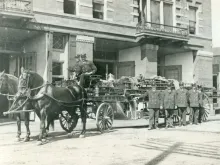
The Butte Fire Department in the 1890s with a horse-drawn hose wagon outside City Hall in Butte, Montana.

Did you know that one fire alarm box still carries a fateful name in Butte? A few minutes before 10 p.m. on January 15, 1895, Police Officer James Steinborn was walking his beat when he spotted flames at the Kenyon-Connell Commercial Company warehouse. He rushed to fire call box 72, at the corner of Utah and Iron Streets, and sent in the alarm. At City Hall, at 24 East Broadway, where the fire department was housed on the main floor, the horses came racing out through the arches, and fifteen firefighters hurried through the winter night toward the warehouse district.

  • Read more about Box 72 and the Thirteen: Butte's Fallen Firefighters of 1895

From Temple to Fox to Mother Lode: The Story of Butte's Historic Theatres

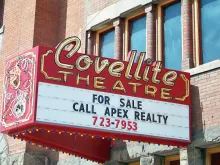
The red and gold Covellite Theatre marquee on West Broadway in Uptown Butte, Montana

Did you know that the richest mining city in America also loved a night at the show? Butte was at the forefront of entertainment from its earliest days, and by 1908 the city had seven moving picture theatres competing for miners and their families. Two years later, four houses were screening motion pictures exclusively, while six other theatres still offered live performance and vaudeville. Every silent film came with a live orchestra, and when talking pictures finally reached Butte in the early 1920s, the first one was shown at the Rialto Theatre at Park and Main.

  • Read more about From Temple to Fox to Mother Lode: The Story of Butte's Historic Theatres

Wide-Open Butte Goes Underground: Prohibition and the Speakeasy Years

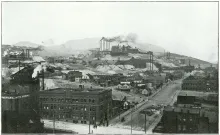
Butte, Montana around 1900, looking across Uptown streets and rooftops toward the mines on the hill, with the Butte Brewery building in the foreground at lower left.

Did you know that when the Push Saloon opened in 1894, it was one of 165 saloons in Butte, and that a four-block walk up Main Street offered a choice of 35 similar establishments? That was wide-open Butte, the copper city where gambling was accepted and alcohol flowed at all hours of the day. In the photograph above, taken around 1900, the Butte Brewery anchors the lower left corner, a reminder that brewing and saloon keeping were pillars of the local economy. Temperance advocates pushed back for years.

  • Read more about Wide-Open Butte Goes Underground: Prohibition and the Speakeasy Years

The Orphan Girl and the World Museum of Mining: A Museum Built on a Real Mine

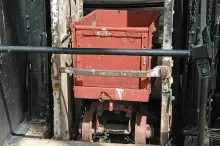
A red ore car sits in a cage at the base of the Orphan Girl Mine headframe at the World Museum of Mining in Butte, Montana.

Most mining museums put artifacts behind glass in a building that was never a mine. Butte did it differently. The World Museum of Mining stands on an actual mine yard on the west side of town, beside the Montana Tech campus, where its 100-foot steel headframe still rises over the shaft it served. The museum was founded in 1963, when members of the Butte Exchange Club saw Butte changing from deep underground mining toward large-scale open-pit mining and feared the tools, buildings, and stories of the underground era would be lost.

  • Read more about The Orphan Girl and the World Museum of Mining: A Museum Built on a Real Mine

Rails That Built Butte: Streetcars, Four Transcontinentals, and the Electric BA&P

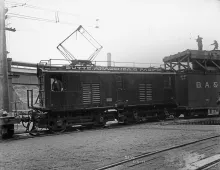
A Butte, Anaconda and Pacific Railway electric boxcab locomotive with its pantograph raised, photographed on May 6, 1913.

Did you know that for most of a century, Butte was the most important and varied railroad center in the northern Rockies? The first railroad reached Butte in 1881, and thirty years later, in 1911, four transcontinental railways served the city. The Northern Pacific and the Milwaukee Road ran through main lines, while the Union Pacific and the Great Northern reached Butte at the ends of secondary lines, and the city was also the east end of a short line, the Butte, Anaconda and Pacific Railway.

  • Read more about Rails That Built Butte: Streetcars, Four Transcontinentals, and the Electric BA&P

A City of Neighborhoods: Dublin Gulch, Meaderville, McQueen, and the Cabbage Patch

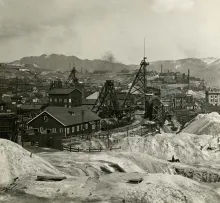
Black-and-white photograph, circa 1910, showing Butte homes and mine headframes crowding the Richest Hill on Earth.

Did you know that old Butte was not one town but many, stacked side by side on the Richest Hill on Earth? As copper drew workers from across the world, newcomers settled near people who spoke their language, cooked their food, and knew their saints and songs. By 1917 about 100,000 people lived in Butte, and imaginary lines divided the Hill into ethnic neighborhoods, each one a small homeland with its own churches, halls, bakeries, and boardinghouses.

  • Read more about A City of Neighborhoods: Dublin Gulch, Meaderville, McQueen, and the Cabbage Patch

Irish Butte: How the Emerald Isle Built the Richest Hill on Earth

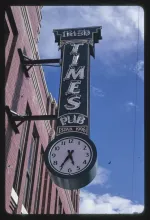
The Irish Times Pub clock sign on Main Street in Butte, Montana, against a blue sky next to a brick building.

Did you know that a Montana mining town once claimed to be more Irish, per person, than Boston? By 1900, Butte had about 12,000 residents of Irish birth or descent in a population of 47,635, according to historian David M. Emmons in The Butte Irish. That was roughly a quarter of the city, a higher share than in any other American city at the turn of the century, and it earned Butte a lasting nickname as the most Irish town in America.

  • Read more about Irish Butte: How the Emerald Isle Built the Richest Hill on Earth

Pagination

  • Current page 1
  • Page 2
  • Page 3
  • Next page ››
  • Last page Last »

Butte, MT Weather

Loading current conditions...

Loading forecast...

Upcoming Events

Butte Events Calendar

This week in Butte:

  • Thu, Nov 26: The second annual Montana Tech Turkey Trot, a 5K and one-mile walk or run benefiting the Butte Food Bank, starts at 9:30 a.m. at the Three Bears parking lot on Blacktail Loop, with registration at 8:30 a.m.
  • Fri, Nov 27: Roadless, a documentary film premiere, screens at 6:30 p.m. at the Covellite Theatre.
  • Sat, Nov 28: Small Business Saturday is celebrated in Uptown Butte.
  • Sat, Nov 28: Witches & Wishbones, a two-mile Witch Walk & Waddle with witchy attire encouraged, starts at 11:00 a.m. at the Anselmo Mine Yard.
  • Sat, Nov 28: The World Ballet Company performs The Nutcracker at 7:00 p.m. at the Mother Lode Theatre.
  • Sat, Nov 28: Illin Degenerates performs at 9:00 p.m. at the Covellite Theatre.
  • Sun, Nov 29: Resonant Glass, a free evening of strings, spoken word, and live collaboration benefiting the Covellite Stained Glass Restoration Project, opens with doors at 5:00 p.m. at the Covellite Theatre.

Copyright © 2026 Rocky Mountain Madman LLC - All rights reserved

Developed and Designed by Rocky Mountain Madman LLC