Did you know that one Butte neighborhood was settled, in large part, by copper miners from a single peninsula in Ireland? Centerville, climbing the hill above Uptown Butte, had the highest Irish concentration in Silver Bow County, and the majority of its Irish families came from the Beara Peninsula in County Cork. Many had worked the copper mines at Allihies, and when those mines failed, a chain of migration carried them across the Atlantic to another copper hill. University College Cork has put the scale at some 1,500 miners who followed that road from Allihies to Montana, and historian David Emmons traced the same West Cork connection through the surnames that filled Butte.
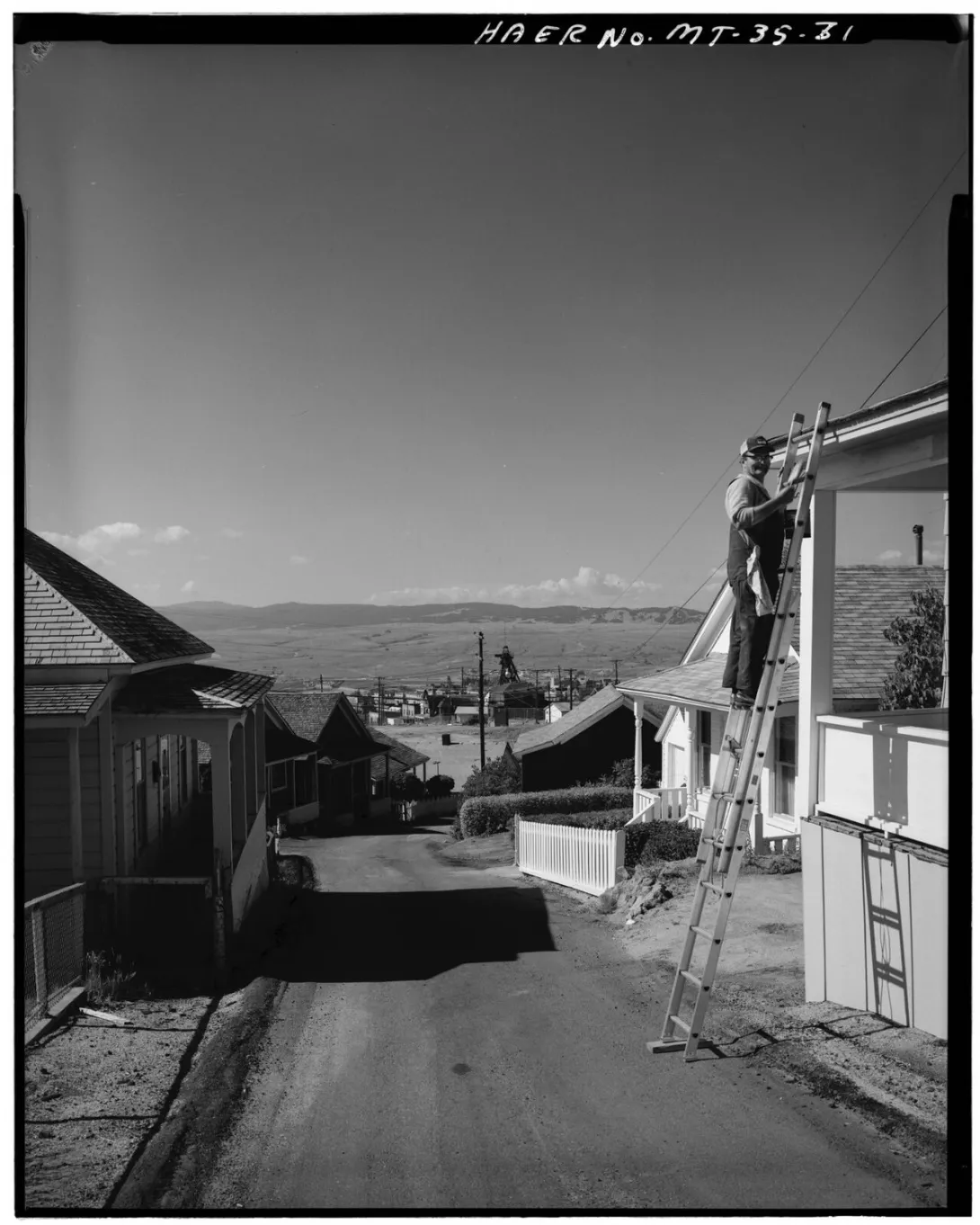
Click to see more photos of Centerville and historic Butte
These were not strangers drifting into an empty camp. Irish businessman Pat Mullins built the Mullin House in Centerville, Denis Leary and John Downs formed the Silver Bow Mining and Milling Company, and William J. McNamara laid out the plat for the town of Centerville itself and became a major property developer. Down the hill, Centerville men worked nearby mines such as the legendary mile-deep Mountain Con. They arrived with hard-rock skills learned underground in Ireland, and they rebuilt, street by street, a community that felt familiar thousands of miles from home.
The heart of that community was Hibernia Hall, built in 1889. The hall was the center of Irish life in Silver Bow County and housed more than a dozen organizations, among them the Ancient Order of Hibernians and the Robert Emmet Literary Association. The Hibernians had organized their first three Butte divisions in 1880, drawing members from Irish-born men and their sons, and their ranks included the first four presidents of the Anaconda Copper Mining Company: Marcus Daly, John D. Ryan, Cornelius Kelley, and William Scallon. The Literary Association, organized in 1881 as the Butte branch of the Clan-na-Gael, kept its officers and members secret and referred to them by number, and by 1905 it was the second largest Clan-na-Gael organization in the United States.
Faith grew up around the hall. Until 1897, St. Patrick Church served the entire Catholic population of the county. That year St. Lawrence O'Toole Church was built, joining Centerville and Walkerville in one parish, and the church was paid for by the Irish organizations in Hibernia Hall. The congregation kept growing, and in 1902 St. Mary was built, with the southern part of Centerville added to that parish. On April 30, 1916, more than a thousand Butte Irish gathered at Hibernia Hall, at 949 North Main, to organize a Butte chapter of the Friends of Irish Freedom, named for the Irish leader Patrick Pearse.
The Beara families also brought their games with them, introducing Gaelic football, hurling, and handball to the hill, while the Gaelic League taught the Irish language, music, and dance to American-born children. It is a remarkable journey to picture: men who had dug copper above the Atlantic in Allihies digging copper again above Butte, then building a hall, two churches, and a whole neighborhood around the work. A historical marker on the Butte, Anaconda and Pacific Hill Trail above Centerville tells that story today, and it closes with a claim Butte still makes with pride: Butte and Silver Bow County remain the most Irish area in America.