Did you know that one of the deadliest nights in Butte history began with a routine fire alarm in the warehouse district? Shortly before 10 p.m. on January 15, 1895, Butte Police Officer James Steinborn was walking his beat when he spotted flames coming from the Kenyon-Connell Commercial Company warehouse. He rushed to fire call box 72, on the corner of Utah and Iron Streets, and alerted the fire department. Kenyon-Connell supplied tools and materials to the mines, and its warehouse stood among railroad tracks, sheds, and other mercantile warehouses just east of Arizona Street.
Click to see more photos of the 1895 Butte warehouse explosion — the devastation, the firefighters, and the funeral procession
Fifteen firefighters hurried from City Hall, at 24 East Broadway, where the department was housed, and went to work on a fire burning in the northwest corner of the warehouse. Someone shouted a warning that explosive powder was stored in the warehouse and in surrounding buildings, but the firemen were assured that there was none. In fact, tons of dynamite were illegally stored inside. A small explosion caused the men to fall back, and after deciding that all was safe, Chief Angus Cameron ordered them to resume their positions. Within moments, the first major explosion occurred, killing thirteen firemen and nearby spectators and blowing shrapnel for miles.
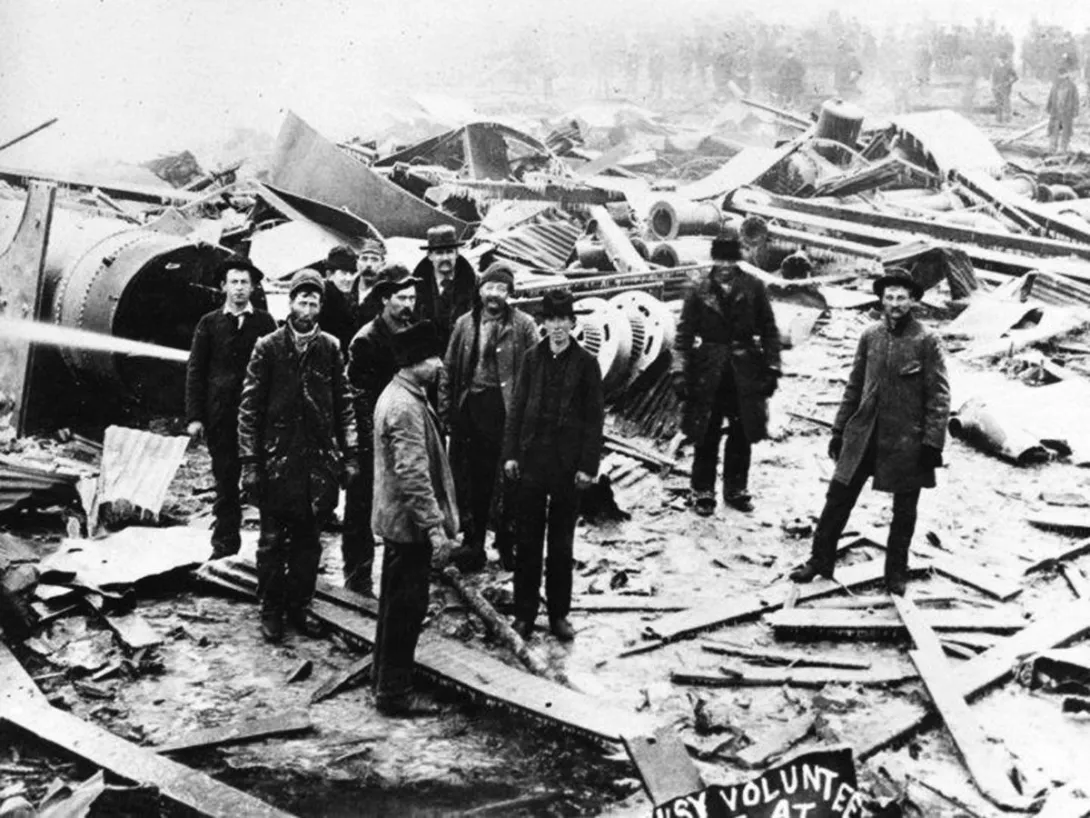
People across the city hurried to help, not realizing that the fire had jumped to the Butte Hardware Company warehouse, which also illegally housed massive amounts of dynamite. Within minutes, that warehouse exploded as well. The blasts threw rabble heads, six-inch pieces of iron placed around dynamite, sawblades, and other shrapnel across the city, striking people blocks away, and debris was propelled as far as Rocker, four miles to the west. Windows were broken throughout Butte. When the toll was finally counted, fifty-eight people had died as a result of the fire and the explosions that followed it.
Grief soon turned to hard questions. Hearings to determine responsibility began on January 21 in the police court at City Hall and lasted ten days. On January 31, the jury concluded that the Kenyon-Connell Commercial Company and the Butte Hardware Company had been criminally negligent and careless in their storing of dynamite. That spring, Mayor William Thompson put in place an ordinance prohibiting explosive materials from being stored within three miles of the city limits. The Montana State Firemen's Association also fought for better life insurance for its members, and it still has one of the best policies in the state today.
Butte buried its dead together. The funeral procession for the thirteen firefighters, one of the largest funerals the city had ever seen, began at City Hall on January 18. Over time, the disaster faded from the memory of many residents, even as later mining tragedies came to overshadow it. In 2015, a group of citizens came together to make sure that the night would be remembered, and the memorial they created was completed in 2023. It stands at Butte Fire Department Station Number 1, on the corner of Mercury and Idaho Streets, honoring the fifty-eight lives lost on a night Butte should never forget.
Photo: volunteers sorting through the devastation after the 1895 Butte warehouse explosion. Photograph from The Great Dynamite Explosions at Butte, Montana: January 15, 1895 (1895), public domain, via Western Mining History.