Few American cities were as thoroughly unionized as Butte. Miners organized on June 13, 1878, when workers at the Alice and Lexington silver mines faced a wage cut from $3.50 to $3.00 a day and formed the Butte Workingmen's Union to resist it. The organization, soon known as the Butte Miners' Union, held the $3.50 wage, grew into one of the largest local unions in the United States, and made June 13, Miners' Union Day, a city holiday. Nearly every trade in town eventually organized, and Butte earned a name that followed it for decades: the Gibraltar of Unionism.
Hard-rock miners had suffered a bitter defeat in the Coeur d'Alene district of Idaho in 1892, where the Butte union had sent money to support the strikers. On May 15, 1893, about forty delegates representing fifteen miners' unions from Montana, Idaho, Colorado, Utah, and South Dakota met in Butte and founded the Western Federation of Miners. The Butte Miners' Union became Local No. 1 of the new federation, which spread across the mining West. Its leaders, including Charles Moyer and William D. "Big Bill" Haywood, later helped to found the Industrial Workers of the World in 1905. Renamed the International Union of Mine, Mill, and Smelter Workers in 1916, the federation merged into the United Steelworkers of America in 1967.
By 1914, however, the Gibraltar was cracking. The competing copper companies that the union had once played against each other had consolidated into one dominant employer, the Anaconda Copper Mining Company, and many miners believed that their local officers had grown corrupt and too close to the company. The company's rustling card system, which required miners to prove they were cleared to work, angered men who saw it as a blacklisting tool. On June 12, 1914, miners at the Speculator mine refused to show their union cards and marched downtown.
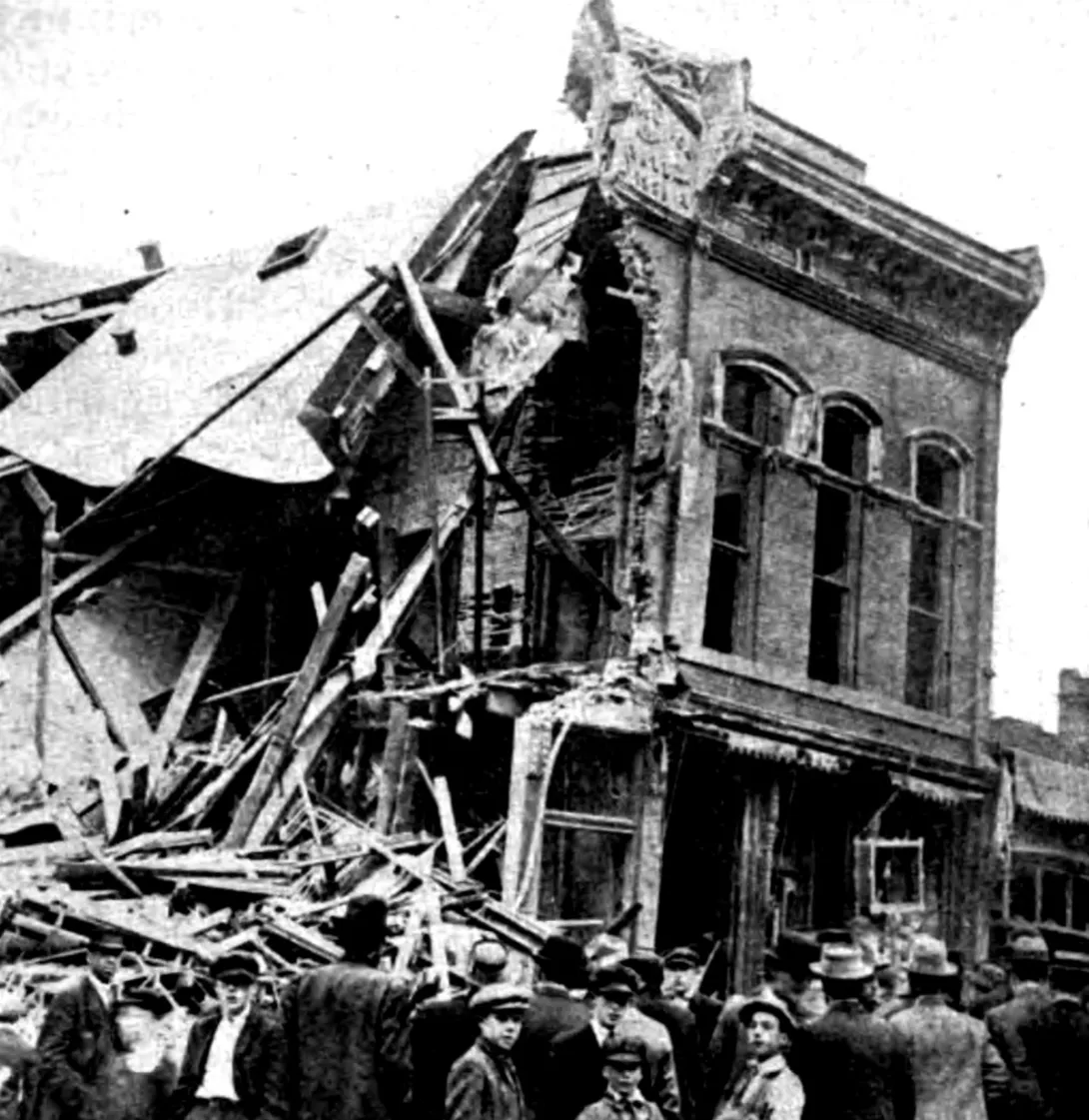
The revolt turned violent the next day, during the Miners' Union Day parade. Dissident miners attacked the parade, ransacked the union hall on North Main Street, hauled away the local's safe, blew it open and took $1,600, and destroyed the union's records. On June 21, thousands of miners organized a rival union, the Butte Mine Workers' Union. On June 23, while federation president Charles Moyer addressed about two hundred loyal members inside the hall, a crowd surrounded the building. A miner approaching the meeting was shot dead, a bystander was also killed, and men in the crowd stole dynamite from a nearby mine and set off charge after charge until the hall was destroyed, while the men inside escaped down a fire escape. After another explosion damaged a company office on August 30, the governor declared martial law and sent in the National Guard. The mine owners announced that they would recognize neither union, and Butte's mines operated as open shops from 1914 until 1934.
Three summers later, disaster pushed Butte's miners to organize again. On June 8, 1917, a fire broke out in the Granite Mountain shaft and spread into the Speculator mine. The Granite Mountain–Speculator disaster killed 168 men and remains the deadliest hard-rock mining disaster in United States history. Miners walked out, formed the Metal Mine Workers' Union, and demanded safer conditions, higher wages, and the end of the contract system and the rustling card. Frank Little, a member of the General Executive Board of the Industrial Workers of the World, arrived in Butte on July 18, 1917, to support the strike, despite injuries from earlier campaigns.
In the early hours of August 1, 1917, six masked men broke into the boardinghouse where Little was staying, beat him, and carried him away. He was dragged behind a car and hanged from a railroad trestle at the edge of town. A note pinned to his body carried the numbers "3-7-77," a Montana vigilante symbol, along with the initials of other union leaders as a warning. No one was ever arrested or prosecuted for the murder. The strike was called off that December. Little was buried in Butte's Mountain View Cemetery, where his gravestone, inscribed "Slain by capitalist interests for organizing and inspiring his fellow men," still draws visitors who come to remember what union recognition cost in Butte.